Seeing the invisible: How NDVI helps prevent crop loss
16.02 2026

Modern agriculture is increasingly relying on data and digital technologies. One of the important tools for monitoring crop conditions is the Normalized Difference Vegetation Index (NDVI), which allows farmers to quickly and objectively assess crop growth and make informed management decisions.
Every field has its own yield potential. The only question is whether you are using it 100 %. Thanks to NDVI, you can get a complete picture of the condition of crops without constant trips to the field — quickly, accurately and on time.
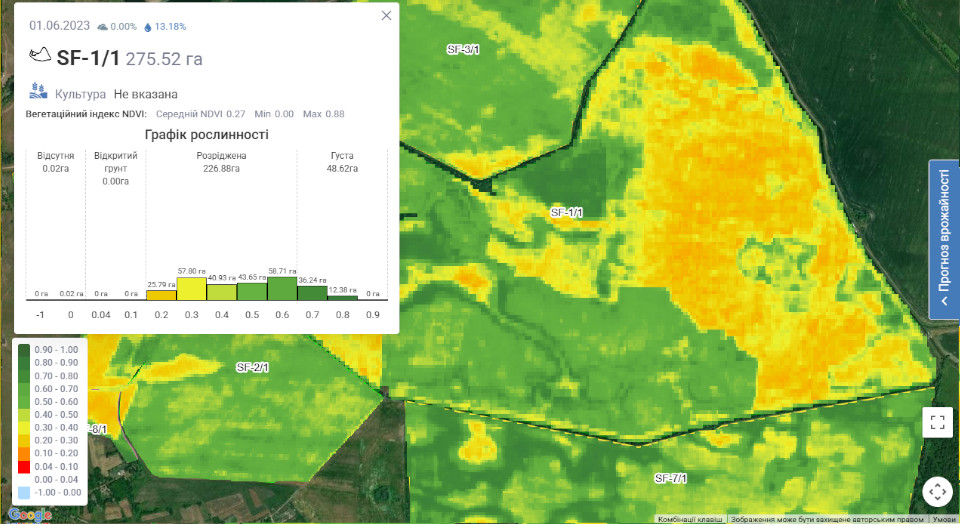
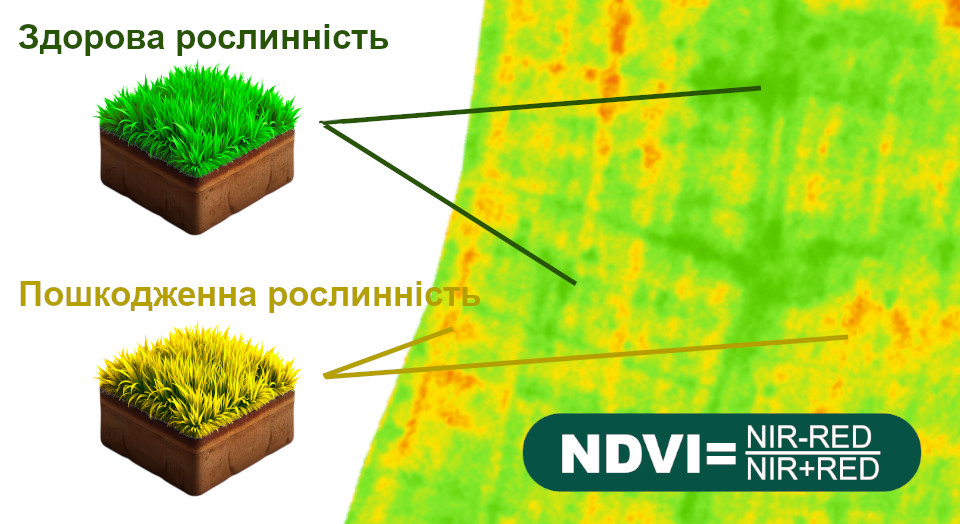
NDVI shows the real state of vegetation in the field. It is calculated based on satellite or drone images and allows you to see what is not visible to the naked eye. The principle of NDVI is based on the fact that healthy vegetation actively absorbs red light and at the same time it reflects near-infrared radiation well. It is on this difference that NDVI is based. As a result, you get a clear map of the field, where green areas are strong and productive crops, yellow areas are those that need attention, and red areas are problem areas that require immediate management decisions.
Typically, peak NDVI values are analyzed, as they are closely related to the level of yield. However, focusing only on the actual maximum of vegetation, which varies from year to year, limits the possibility of early forecasting and reduces its value. Therefore, additional parameters are involved in the analysis, reflecting the meteorological and climatic conditions of the region. The wider and more reliable the array of input data, the higher the accuracy of the forecast. Taking into account the significance of factors influencing yield, the Soft.Farm system uses information about the variety and previous crop, sowing and harvesting dates, actual yield indicators, as well as the amount of precipitation and the sum of active temperatures for the previous year and since the beginning of the current season in the calculations, since all this data is stored in the SF.Cloud cloud environment. Thus, NDVI allows you to see the real state of the field even when problems are not yet visually noticeable.
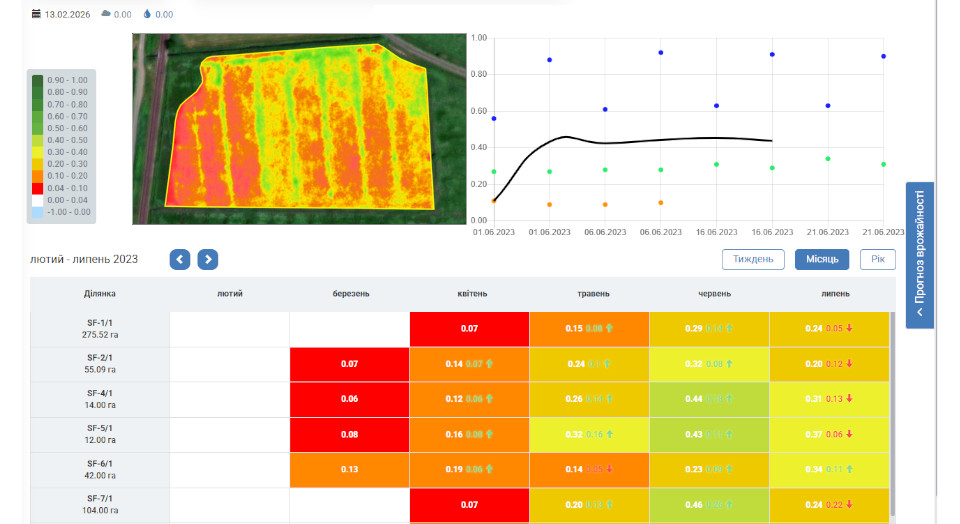
The web service offers a NDVI field monitoring system based on satellite data, which helps to monitor the condition of crops throughout the growing season.
Our solution includes:
- regular NDVI maps for each field;
- automatic data updates;
- detection of problem areas (stress, uneven emergence, damage);
- analysis of crop development dynamics over time;
- convenient access to data via an online platform from any device.
NDVI maps are updated automatically and allow you to quickly respond to changes in the field without the need for constant visits. No complicated settings — only clear data for decision-making.
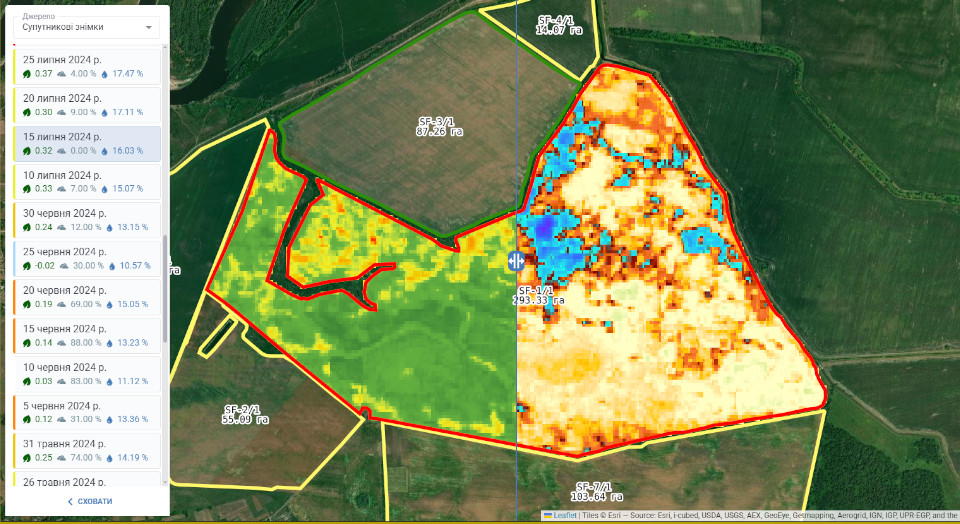
In Soft.Farm, satellite images are conveniently collected and compared with each other. At the same time, there is no need to connect all the farm fields — images can be ordered only for specific geozones. The necessary images can be viewed online or downloaded in .kml or .pdf formats. In the future, these files can be easily exported for use in external systems, in particular in Google Earth.
Using NDVI provides a number of practical advantages:
- early detection of problems (stress zones, lack of moisture, diseases or damage by pests at the initial stages);
- cost optimization (the possibility of differentiated fertilizer, crop protection and irrigation reduces resource overspending);
- increased yield (timely response to problems helps to preserve the harvest potential);
- objective analytics (NDVI data helps to assess the effectiveness of agricultural technologies and make informed decisions for future seasons).
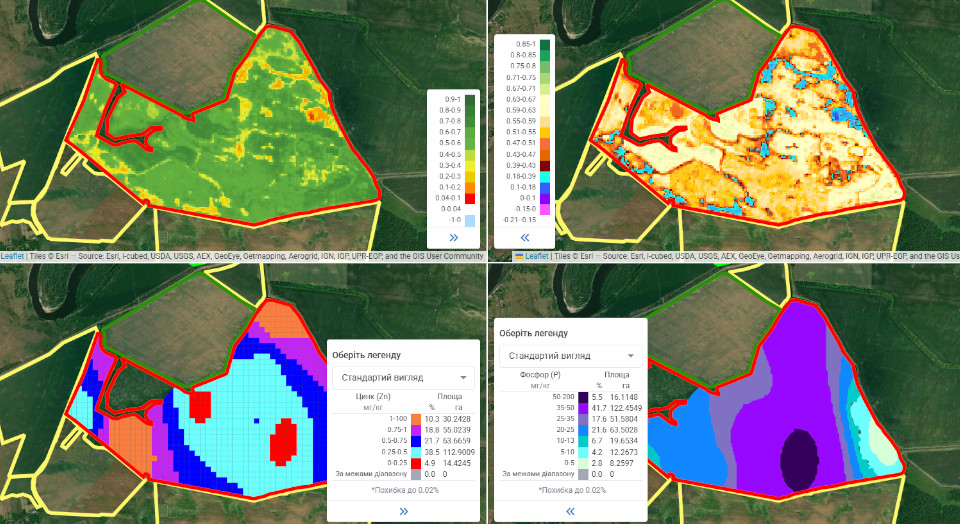
Soft.Farm provides tools for automated analysis of satellite data, in particular, it identifies areas with different levels of plant development and allows you to organize images by fields, crops or time periods. Based on this data, you can identify problem or productive areas where it is advisable to change fertilizer application rates, as well as create digital task maps for agricultural machinery. Such maps are used in differentiated application technologies. A comprehensive approach to data analysis when creating task maps helps optimize the use of fertilizers and pesticides, reduce production costs and prevent the negative consequences of excessive exposure to crops.
Use modern technologies to manage crops more effectively, reduce risks and increase profits this season.
Back to news list